
Check deck level, nearby cabins, lifts and adjoining public venues.
ENTERTAINMENT / RECREATION
Entertainment and Recreation
ADSIGHT LTD is a structured ship-inspection and onboard-experience guide. Use this page to assess venues and active spaces as working public areas, not as a list of guaranteed attractions: names, deck positions, capacity, operating hours and inclusion can vary by ship and itinerary. Read it alongside the relevant vessel deck plan and current daily programme.
Consider weather, sea state, time of day and scheduled use.
Trace queues, seating, circulation and accessible routes.
DECK ZONES
Where entertainment and recreation tend to sit
Public areas are often arranged in broad vertical bands, although actual layouts differ. Enclosed entertainment lower in the public decks is generally more protected from weather. Promenade or central public decks often combine lounge territory with circulation. Upper exterior decks are commonly used for pools, sun areas, sport and observation, where exposure and access routes become more important.
Interior Protected show and gathering spaces
Central Lounge and promenade circulation
Upper Outdoor recreation and observation
UPPER EXTERIORPOOL DECK01 SPORT COURTLIFT LOBBY
CENTRAL PUBLICLOUNGESERVICE CORELIFT LOBBY
INTERIOR VENUESTHEATREPUBLIC CIRCULATIONSERVICE CORE
Read venue names together with their neighbours. A theatre beside a lift lobby may have concentrated pre-show movement, while a lounge on a route to dining can see people passing through even when no programme is running. Exterior activity areas may be quiet at one time and exposed, busy or windy at another. A deck plan cannot predict every sound or operating pattern, but it can reveal the relationships worth checking before choosing a cabin or planning an evening.
VENUE TYPES
Indoor venue types and operating patterns
Indoor public rooms are best compared by their purpose, seating pattern and access routes. A named venue can change function during the day, and the current programme remains the practical source for times, reservations and access conditions.
Performance venues
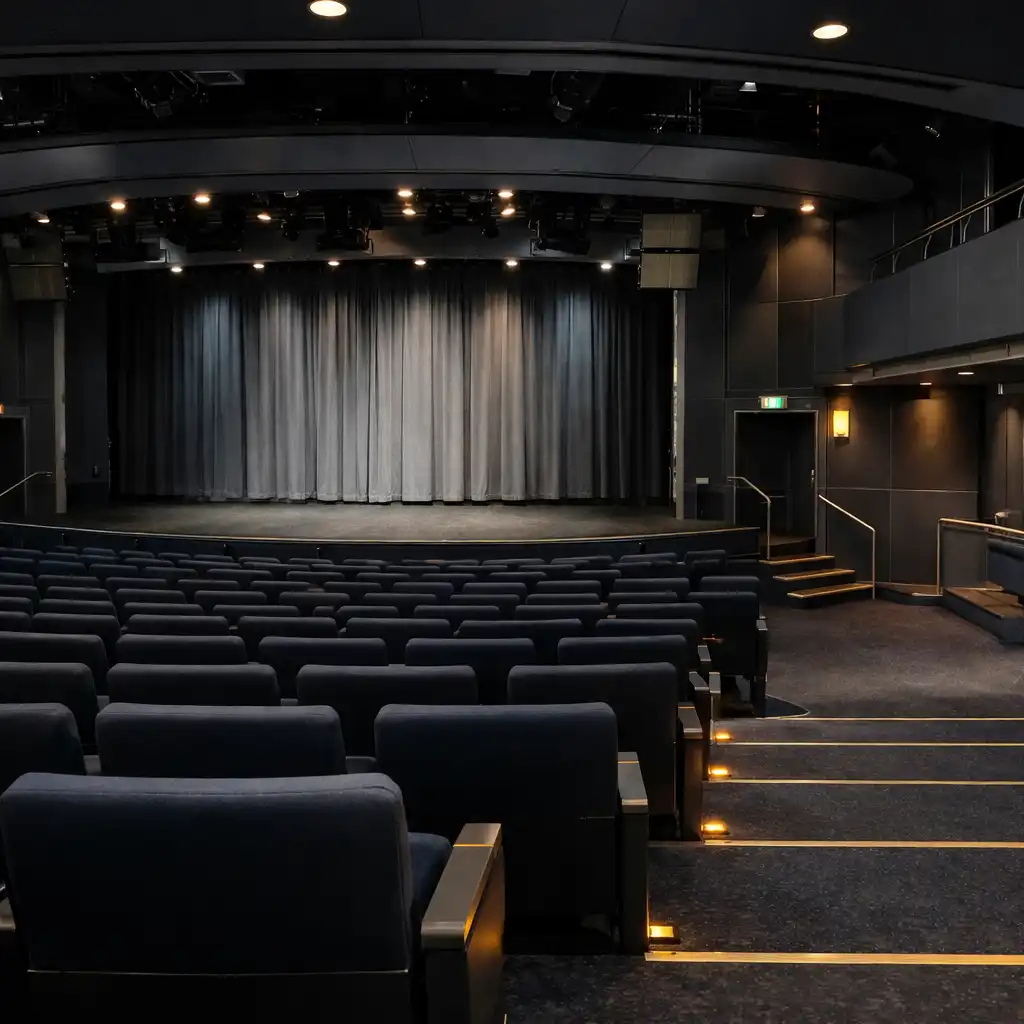
A dedicated theatre is usually arranged around a stage and defined sightlines; a smaller show lounge may use more flexible seating. Check aisle access, likely entry queues and the distance from lifts or stairs. Confirm any reservation or ticketing arrangement in the daily programme rather than assuming open seating.
Lounges and music spaces
Lounges, music rooms and promenade gathering spaces can shift from daytime talks to evening music. Look for seating turnover, acoustic separation and proximity to bars or dining. Also inspect whether passengers pass through the room on a main route or can move around it without crossing the seating area.
Flexible indoor rooms
A library, game room or enrichment room may host talks, classes, card games, meetings or overflow activity at different times. A room name alone does not establish constant access. Check the daily programme for the current use, and note whether the space sits beside a quiet corridor or a busier public hub.
Casino as one evening venue
Where provided, a casino can include table-game areas for poker, roulette and blackjack. Treat it as one part of the wider evening circuit: inspect its layout, adjacent bars or lounges, access conditions and return route. Operation can vary by ship, route and time, so current vessel information matters.
DAYTIME DECKS
Open-deck recreation and pool areas
A pool deck can combine water access, sun seating, food and drink circulation, programmed events and simple transit between areas. The pool is only one part of the zone. When reading a plan, look for potential pinch points around stairs, lifts, buffet access, towel points and rail-side seating rather than assuming one universal arrangement.
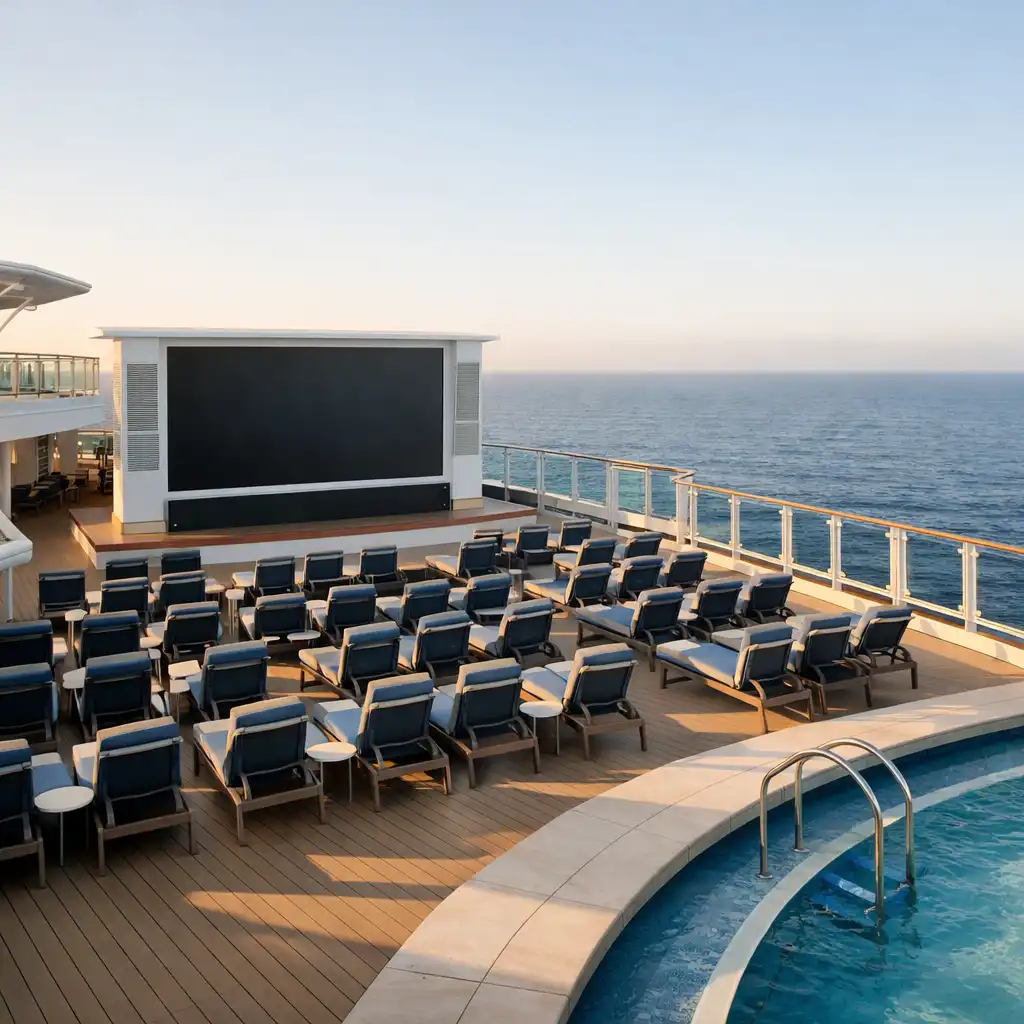
Outdoor screens and staged activity can change between films, demonstrations, sail-away activity and quiet periods. Check the daily programme for the actual use of the deck at the time you expect to visit.
Wind, rain, heat, glare and operational decisions can alter how an exterior area feels or whether a scheduled activity proceeds. The plan shows location; current onboard information supplies the usable context.
- Shade: note available cover and its distance from activity.
- Seating: compare seating areas with likely crowd points.
- Routes: check wet surfaces, level changes, stairs and lifts.
- Noise: consider sound travel to open decks or cabins.
ACTIVE RECREATION
Routes, courts and fitness spaces
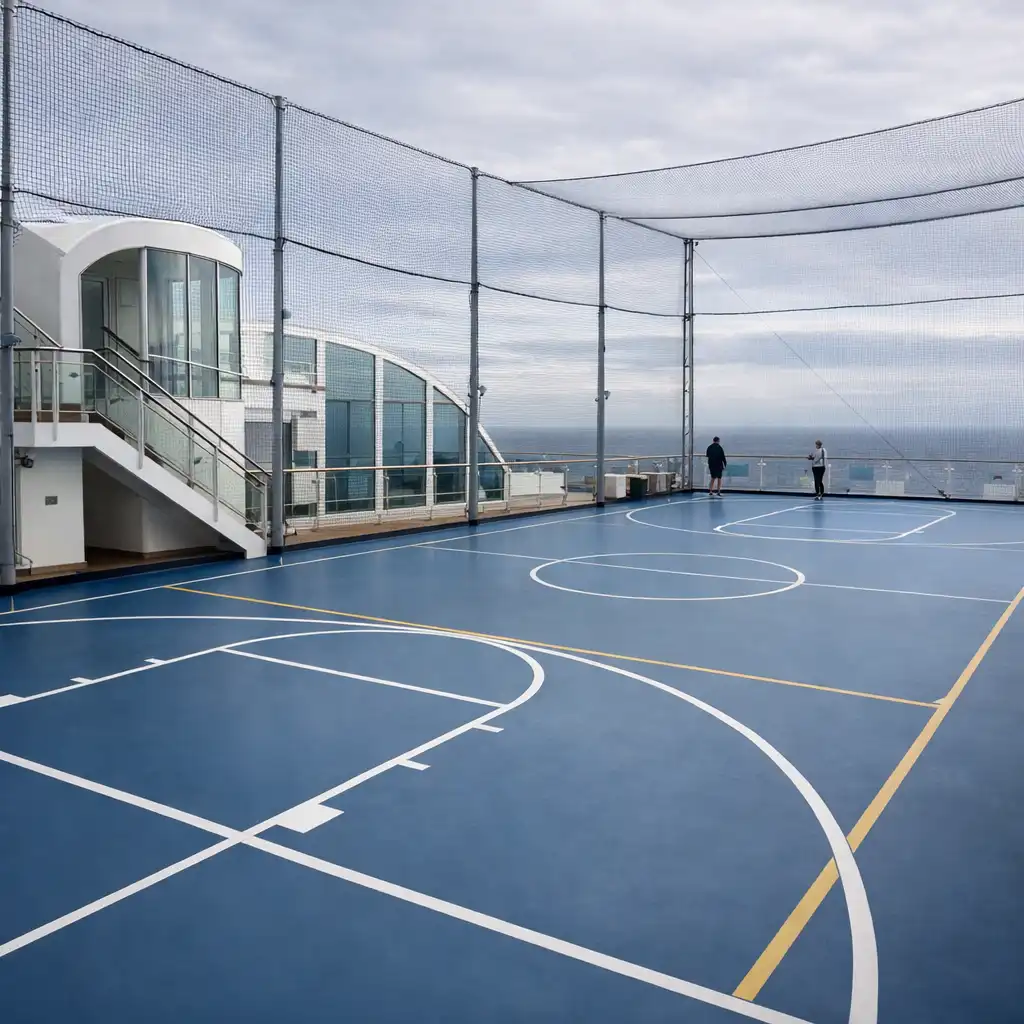
Where provided, active-recreation facilities differ most in setting, weather sensitivity and space requirements. A deck plan and programme help establish whether an area is exposed, shared with other uses, likely to be timetable dependent, or separated from principal circulation.
| Facility family | Typical setting | What to check | Weather effect | Access cue |
|---|---|---|---|---|
| Sports court | Often upper deck where provided. | Boundary, netting and shared routes. | Can be wind and rain sensitive. | Stairs or nearby lift lobby. |
| Walking route | May follow an exterior deck edge. | Continuity, interruptions and crossings. | Exposure can affect comfort. | Entries near observation points. |
| Fitness area | Often indoors where provided. | Layout, booking and opening times. | Usually less weather dependent. | Nearby changing or service areas. |
| Water activity area | May sit within an exterior pool zone. | Depth cues, seating and circulation. | Conditions can alter use. | Wet-surface transitions. |
| Family activity zone | May be indoor or upper deck. | Age conditions and programme timing. | Exterior use may be limited. | Dedicated entry or shared corridor. |
Read a route for interruptions
A walking route or sports deck may cross sun areas, service doors, stairs, observation points or event spaces. Check whether it appears continuous and whether likely peak-use periods could change its usefulness. Surface transitions and exposed corners can be as relevant as the route’s published length.
Check the operating details
Fitness and class spaces depend on equipment layout, booking rules, opening times and nearby changing or service areas. Check current vessel information for age rules, class scheduling, reservations and any applicable charges rather than assuming a particular equipment list or inclusion.
EVENING CIRCUIT
Venues, routes and casino context
Arrive
Use lift lobbies and stairs as reference points for the public-deck approach.
Gather
Allow for queues and waiting space near start times.
Attend
Check seating, access conditions and nearby refreshment routes.
Depart
Identify an alternative route when performances or events finish.
Evening spaces can be read as a sequence rather than isolated destinations. Theatres, lounges and dining-adjacent venues may share arrival routes and crowd most noticeably before and after scheduled events. Where provided, a casino can form one element of that circuit alongside performance and social spaces. Poker, roulette and blackjack are examples of table-game facilities that may be present; location, access, noise and a clear return route are the more useful inspection points.
- Check start time and exact venue location.
- Confirm seating, access or reservation instructions.
- Trace your lift or stair route and likely queue space.
- Review dress or age conditions where applicable.
- Note nearby alternatives if plans or conditions change.
DAILY PROGRAMME
Practical planning: programme, access and cabin proximity
Use the daily programme with a deck plan. Match the event name to its deck location, then check its start time, reservation status and likely arrival route. Identify nearby alternatives as well, particularly when an outdoor event may be affected by conditions. Scheduled activity can change, so current onboard information is the practical authority for timing and rules.
Arrival checklist
- Allow time for the lift or stair route.
- Locate likely queue and waiting space.
- Check accessible seating or viewing considerations.
- Consider weather protection outdoors.
- Identify a clear leaving route.
- Confirm current instructions on board.
Cabin proximity checklist
- Check public decks above and below.
- Note direct theatre or lounge adjacency.
- Consider pool-deck activity overhead.
- Identify lift-lobby traffic nearby.
- Look for outdoor seating or sports areas.
- Remember plans show proximity, not every sound pattern.
ASSESSMENT PRINCIPLE
Inspection conclusion and next reading
Entertainment and recreation are most useful to assess as connected spaces shaped by deck position, schedule, passenger flow and exposure, not by a facility name alone. A theatre, lounge, pool deck, sport area or casino can have a different practical value depending on where it sits and when it operates.
Use published plans to establish adjacency, then use current vessel information to verify timing, access and operating context. This approach makes comparisons more reliable when ships use different names or arrange their public areas in different ways.
FAQ
Frequently asked inspection questions
Will every cruise ship have the same entertainment facilities?
No. Theatres, sports courts, pool decks, dedicated lounges and casino areas vary between ships. Where a casino is provided, its arrangement and operating context can also differ. Use the vessel’s deck plan and current information to identify the actual facilities rather than treating a general category guide as a guaranteed inventory.
How can I assess possible activity near a cabin?
Check public decks directly above, below and beside the cabin location, then look for theatre, lounge, pool-deck, lift-lobby and sports-area adjacency. Plans reveal proximity and likely movement routes, but they do not show every operating pattern, sound condition or temporary programme change. Treat the comparison as a practical clue, not a prediction.
What should I check once I am onboard?
Prioritise the daily programme, exact venue location, start time and any access or reservation instructions. For outdoor events, also consider the current weather context and alternative nearby spaces. Current onboard information is the best reference for timing and rules because scheduled activity and operational arrangements can change.
Where does the casino fit within evening entertainment?
Where provided, a casino is one possible evening venue alongside performances, lounges and dining-adjacent spaces. Poker, roulette and blackjack may be examples of table-game facilities. Its operation, access conditions and place in the evening route can vary by ship and itinerary, so check current vessel information before planning around it.