Ship-inspection guide

Dining, Bars and Lounges

This guide treats onboard food-and-drink spaces as parts of a working vessel, not as restaurant reviews. Venue names vary by line and ship, but their location, service type, seating, access and operating pattern can be inspected systematically. Use it to distinguish included dining, additional-charge or reservation venues, casual counters, bars and lounges before applying the questions to a specific deck plan and sailing programme.

Start with venue types

Method note

How to read a venue plan

Use this reference as a set of planning questions, not a substitute for a ship-specific guide. The same category can work very differently according to deck placement and passenger demand. Check the published deck plan, daily programme and booking terms for the sailing: those sources confirm inclusions, opening patterns, access routes and event-related changes that a general layout cannot settle.

Classification

Venue types at a glance

A practical vocabulary makes a deck plan easier to read. A ship may combine categories or use different names, yet each family creates a recognisable pattern of access, seating, timing and passenger movement.

Scheduled restaurant

Main dining room

Service model: Often the clearest structure for evening meals, with an assigned, flexible or published reservation process. Seating: Tables are generally organised for meal service rather than quick turnover. Inspection point: Schedules, dress expectations, dining times and table assignment can vary. If dinner timing matters, compare the entrance with lift banks, stair cores and nearby show venues.
Reservation-led

Reservation dining

Service model: A booking-led restaurant may carry a supplement or package conditions. Terms to inspect: reservation windows, cancellation rules and likely table turnover. Location: Check whether it sits in a quieter wing or beside busy public circulation. Cuisine and pricing are ship-specific; the useful pre-sailing task is understanding the terms and route.

Flexible service

Casual food venues

Service model: Buffet rooms, counters, cafés, poolside service and late or limited-hour outlets can spread demand across the day. Seating: Look at capacity, tray routes and indoor or outdoor fallback space. Queue flow: A useful room keeps passengers from crossing a service line simply to reach a table or exit.

QueueCounterSeating

Service and dwell

Bars and lounges

A bar is primarily service-led; a lounge may prioritise seating, views, music or conversation. A lounge can include a bar while operating differently during performances or events. Inspect noise, applicable smoking rules and the evening crowd flow created by nearby venues.

BarCounter capacity, ordering and standing room.
LoungeSeat choice, sightlines and stay time.

Deck room

The main dining room as a traffic hub

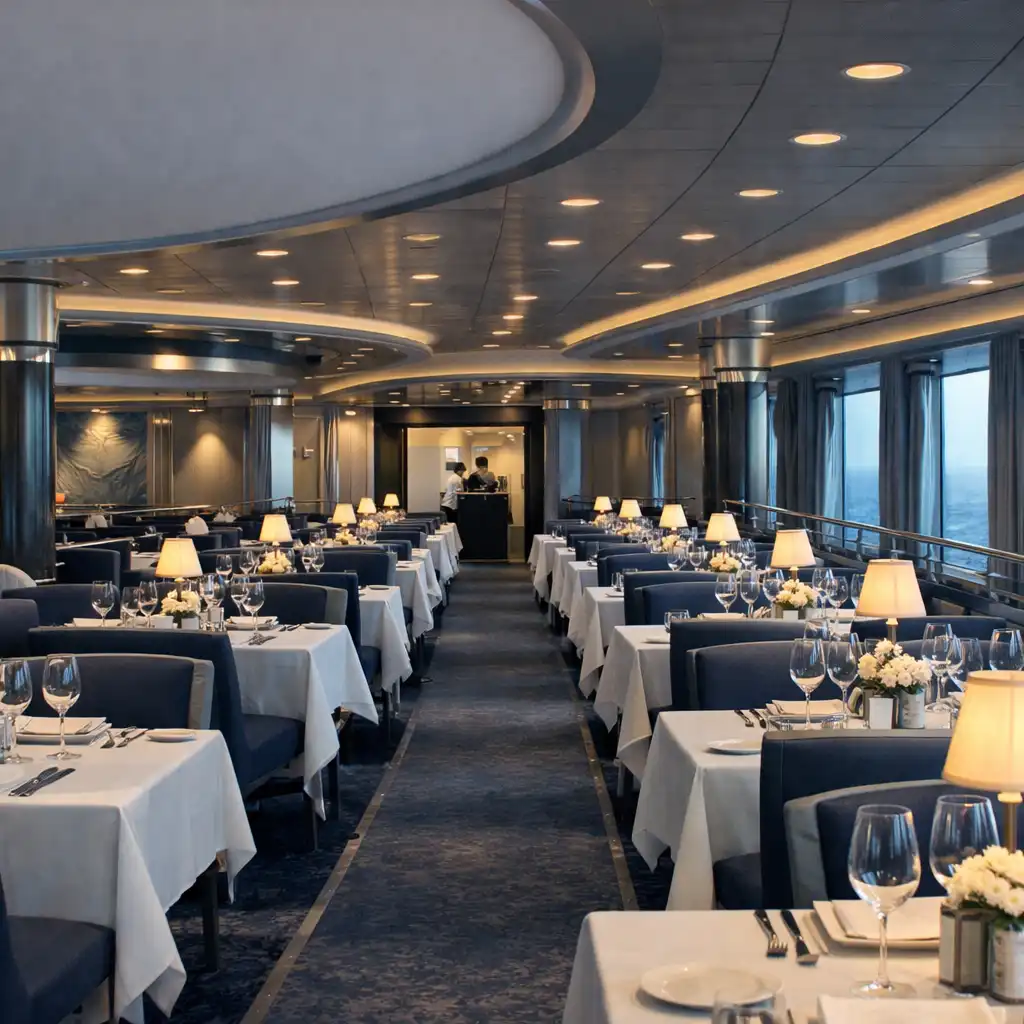
Read the room before reading the menu. The principal dining room is often the most useful starting point for understanding evening passenger movement because it can connect with lift lobbies, stair cores, atrium routes, theatres and adjacent bars. Its entrance position and table layout influence whether arrivals feel orderly, formal or congested at peak times. A central room may be convenient before or after a show, while a more separated room can reduce through-traffic; neither arrangement is automatically preferable.

Look for clear routes from the entrance to tables and for exit paths that do not feed directly into another queue. Published plans and venue information may indicate the operational model, but they do not always show the practical effect of a busy arrival window.

Operational details to verify

Seating

Check whether assigned tables, flexible dining or a reservation process is published for the sailing.

Timing

Compare first or second sittings and open dining windows with show times where those details are published.

Access

Verify step-free routes, accessible tables and lift distance against the actual ship plan.

Generic cruise main dining room showing a central aisle, arranged tables and a distant service entrance.
Generic main-dining-room inspection view: aisle, table and entrance relationships rather than a named vessel or fixed service arrangement.

Comparison

Choose the service model that fits your day

These generic models help compare planning effort and daily use. Actual inclusions, reservations and operating arrangements should be confirmed for the vessel and sailing.

Venue modelUsual access modelLikely planning needSeating patternBusiest period / deck consideration
Main diningIncluded or published dining arrangementCheck assigned, flexible or reservation timingMeal-service tablesEvening arrivals; compare with lifts and theatre routes
Reservation diningBooking-led; supplement or package conditions may applyReview windows, terms and cancellation rulesRestaurant tablesBooked periods; check quiet versus high-traffic location
Buffet / casualFlexible counter or self-service patternCheck service points and daily hoursShared indoor or outdoor tablesBreakfast and sea days; inspect tray and exit routes
Café serviceCounter-led, sometimes with limited seatingCheck opening pattern and locationSmall tables or nearby public seatingShort visits; assess atrium or promenade traffic
Poolside countersCasual outdoor service where offeredCheck weather and recreation-day operationOpen-deck seatingPool activity; consider wet-deck circulation and fallback space
Use the comparison to match a venue model to your routine, mobility needs, party size and evening plans. A model is not universally better: confirm vessel-specific inclusions, reservation conditions and current programme timing before departure.

Deck relationships

Map venues against passenger flow

Food and drink facilities make more sense when read beside circulation cores, entertainment areas, pool decks and outdoor exposure. A nearby venue can be convenient before a show yet noisier during embarkation, peak dining or late events. Outdoor counters depend more on weather and recreation activity than interior venues. The useful question is not simply which deck holds a venue, but how passengers reach it and where their route continues.

Typical relationship, not a vessel plan.

Central core
Lifts / stairs
Main dining
Entertainment
Promenade edge
Bar / lounge
Open deck
Casual counter
Central core

Easy lift and theatre connections; often a busy decision point.

Promenade edge

Views and walk-through traffic can coexist around lounges.

Open deck

Casual use overlaps with weather and recreation activity.

Casual service

Casual food venues and queue flow

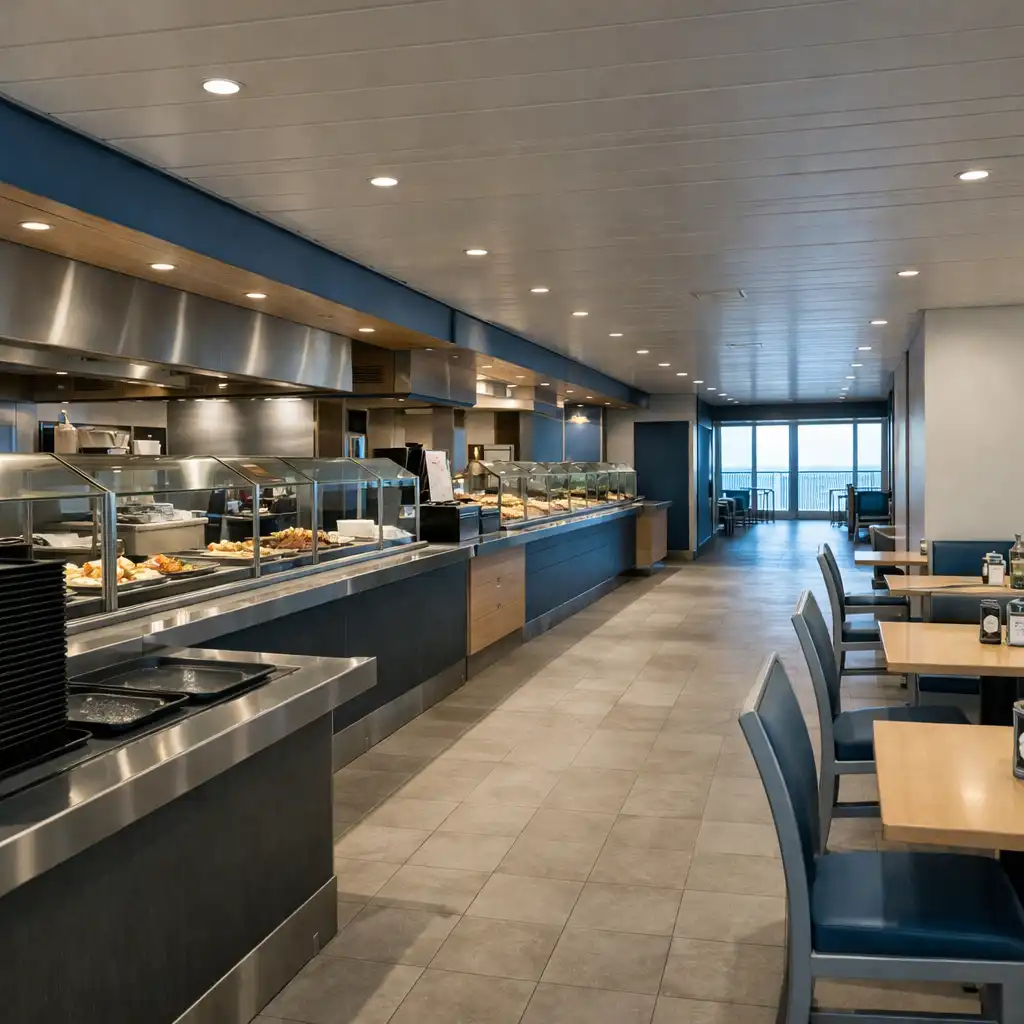
Casual dining works best when service counters, tray return, seating and the path through the room do not compete. On a plan or inspection image, trace the passenger sequence: approach the queue, collect food, find a table, return items and leave. Check whether queues cross lift lobbies, whether seating is separated from service lines and whether passengers can circulate without carrying trays through a bottleneck. Peak breakfast and sea-day demand can make the same room function very differently.

  1. Approach: identify where a line forms and whether it blocks a public route.
  2. Collect: look for clear counter, condiment and payment or collection zones where shown.
  3. Settle: compare table areas, tray return and exits with the service line.
Generic cruise casual dining counter with a service line, compact tables and a broad circulation aisle.
Generic counter-service circulation: service line, seating edge and aisle are the inspection points.

Lounge conditions

Bars and lounges: assess the setting

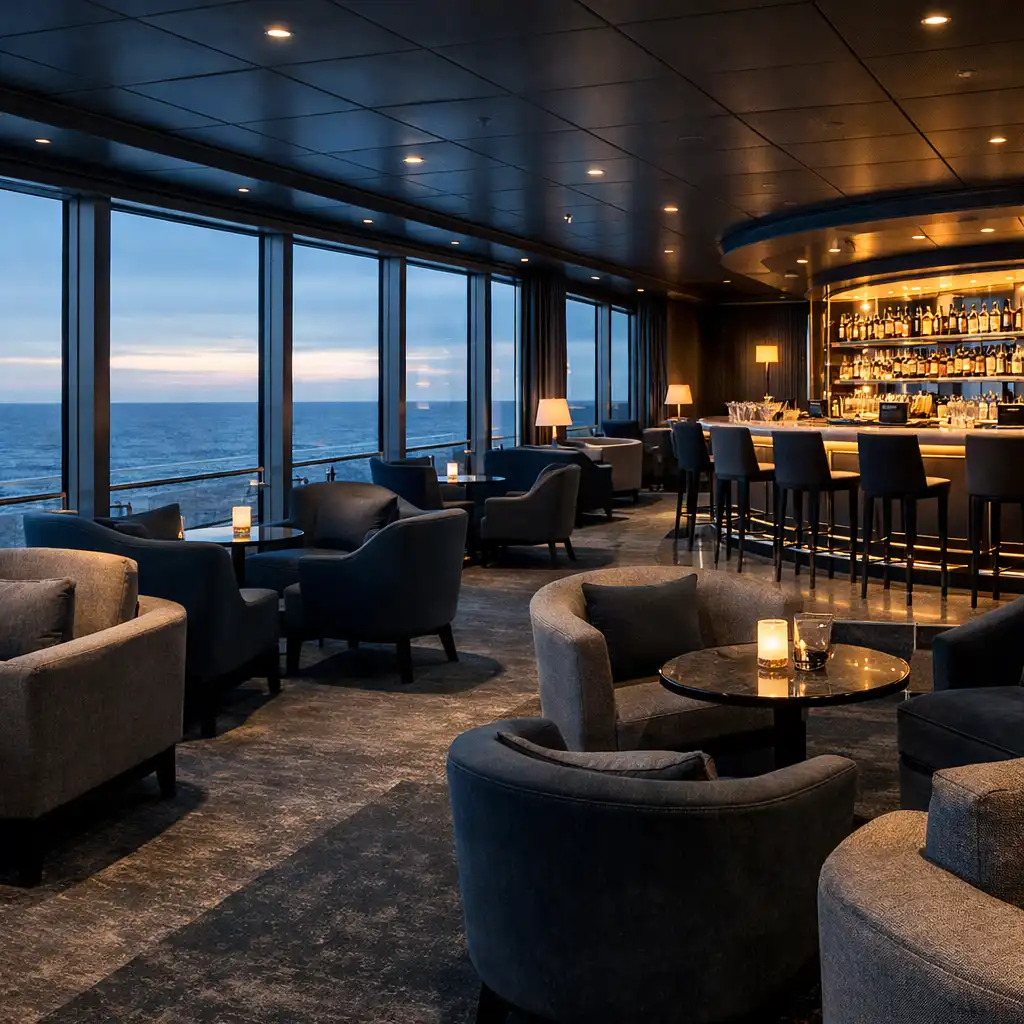
A bar is a service point; a lounge is often a stay point, although many spaces combine both. Look for bar signals such as counter capacity, ordering points and standing room. Lounge signals include seat variety, sightlines, acoustic separation and a connection to views or performances. Conditions can change by time, event use and vessel policy, so photographs alone are not enough.

Atrium

Atrium setting

Central foot traffic can make this useful for short visits and meeting points, while limiting quiet time during busy transitions.

Observation

Observation setting

View-led seating may support daytime use, but assess seat variety, route exposure and the position of the service point.

Entertainment-adjacent

Event setting

Convenient before a show, with possible interval traffic, later noise and changing availability around performances.

Comfort and access checks

Check seating quantity and type, step-free route, toilet proximity, applicable smoking policy, event schedule and whether the venue becomes a passageway at peak times. These practical details help distinguish a pleasant image from a space that suits your intended use.

Generic cruise observation lounge showing varied seating, sea-facing windows, circulation paths and a compact bar.
Observation-lounge inspection view: seating zones, sightlines, windows and the bar relationship.

Planning check

Apply the guide to a specific sailing

Turn a general understanding of venue types into practical decisions by checking the published material for the actual vessel and itinerary.

01

Read the deck plan. Mark dining rooms, casual counters, bars and lounges before relying on venue names.

02

Locate lift cores. They often reveal the usable route more clearly than a deck number alone.

03

Identify access models. Separate included venues from reservation-led options and review published terms.

04

Check opening patterns. Service points may change by day, port schedule, weather or operations.

05

Compare show times. Dinner and entertainment timing can change which route feels convenient.

06

Note outdoor fallback. Consider indoor seating and wet-deck paths where casual service is outdoors.

07

Review accessibility information. Check step-free entry, table access, queue space and assistance processes.

08

Reserve after checking terms. Confirm timing, cancellation conditions and party requirements before committing.

A useful venue plan provides alternatives across time, location and noise level. One striking restaurant or bar image cannot reveal passenger flow, access or timing; use this guide alongside the published ship plan and daily schedule.
Return to guide index

FAQ

Frequently asked planning questions

Next inspection

Continue the ship inspection

After mapping venue routes, compare cabin locations for noise and access trade-offs, or inspect entertainment timing and the passenger flow around performance spaces.